Navigating Australia's Interstate Freight Challenges: Solutions for Long-Distance Logistics
Navigating Australia's Interstate Freight Challenges: Solutions for Long-Distance Logistics
Moving freight across Australia's vast distances presents unique challenges that require specialized solutions. From the bustling ports of Sydney to the mining regions of Western Australia, interstate logistics demands careful planning, robust infrastructure, and innovative approaches to overcome geographical barriers.
Understanding the Scale
Australia's interstate freight network spans over 7.7 million square kilometers, with major routes connecting cities separated by distances that would cross multiple European countries. The Sydney to Perth route alone covers 3,290 kilometers, making it one of the longest regular freight corridors in the world.
This scale creates unique challenges: fuel costs, driver fatigue management, vehicle maintenance across remote areas, and the need for strategic depot locations to ensure efficient cargo handling and driver rest periods.
Strategic Route Planning
Successful interstate freight operations rely on sophisticated route planning that considers multiple factors beyond simple distance. Weather patterns, road conditions, weight restrictions, and seasonal variations all impact delivery schedules and costs.
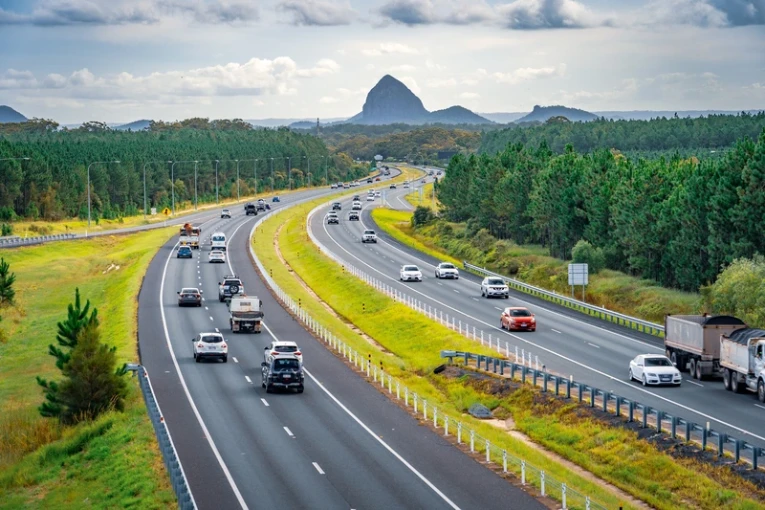
The Pacific Highway connecting Brisbane and Sydney requires different planning considerations than the Nullarbor Plain crossing between Adelaide and Perth. Smart logistics providers use advanced software to optimize routes based on real-time conditions, historical data, and predictive analytics.
Technology Solutions for Remote Monitoring
GPS tracking and telematics systems are essential for interstate freight management. These technologies provide real-time visibility into vehicle location, fuel consumption, and driver behavior across Australia's remote highways.
Satellite communication systems ensure connectivity even in areas with limited mobile coverage, enabling continuous monitoring and emergency response capabilities. This is particularly crucial on routes through the Outback, where help may be hundreds of kilometers away.
Regulatory Compliance Across States
Interstate freight operations must navigate varying regulations across different states and territories. Heavy vehicle permits, road access restrictions, and environmental regulations can differ significantly between jurisdictions.
Professional logistics providers maintain expertise in multi-state compliance, ensuring shipments meet all regulatory requirements while minimizing delays and additional costs. This includes understanding bridge weight limits, curfew restrictions in urban areas, and special permits for oversized loads.
Fuel Management and Cost Control
Fuel represents a significant portion of interstate freight costs, particularly given Australia's long distances. Strategic fuel purchasing, efficient route planning, and modern vehicle technology help control these expenses.
Many operators use fuel cards and bulk purchasing agreements to manage costs across different states. Additionally, the adoption of more fuel-efficient vehicles and alternative fuel technologies is helping reduce the environmental impact and operating costs of long-distance freight.
Building Resilient Supply Chains
Interstate freight forms the backbone of Australia's supply chains, connecting manufacturers, distributors, and retailers across the continent. Building resilience into these networks requires redundancy, flexibility, and strong partnerships with reliable logistics providers.
The COVID-19 pandemic highlighted the importance of robust interstate freight networks, as border closures and restrictions tested the industry's adaptability. Companies that invested in flexible logistics solutions and strong partnerships were better positioned to maintain operations during challenging periods.